Figures as of 2026-11-18 · page checked 2026-11-18
A day in Satpura National Park begins at the Madhai jetty in the dark, not at a gate. The motorboat across the Denwa backwaters comes first; the gypsies, drivers and mandatory guides wait on the core bank. The old FAQ capped Madhai at 24 vehicles a day and Churna sees a fraction of that. Fees and timings are on the jeep and canter safari page.
The crossing and the first hour
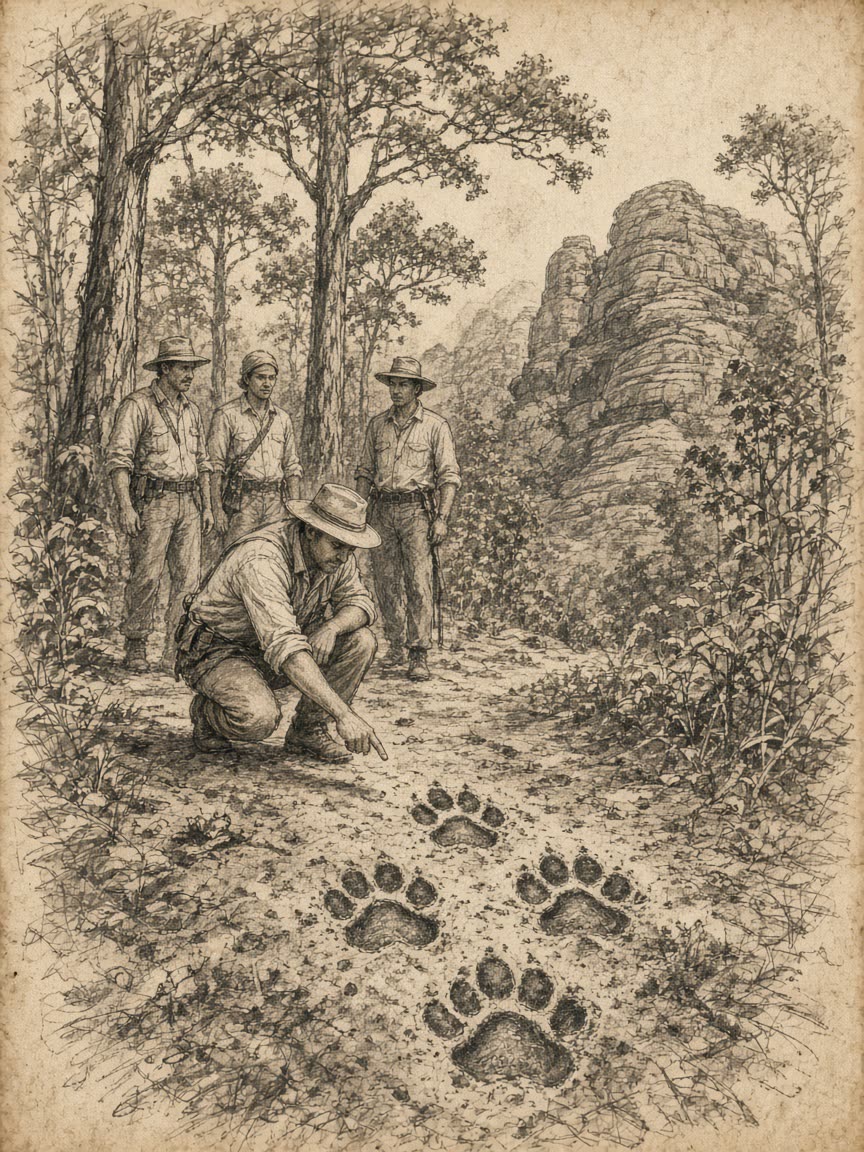
Winter drives start at 06:00 under the official timings and summer ones at 05:45, so the crossing is in half-light. Pied kingfishers work the jetty and ruddy shelduck sit out on the water in winter. On the far bank the vehicle takes one of the Madhai routes: Lagda along the Sonbhadra river, where crocodiles are reported and the Malabar whistling thrush sings; Jhin Jhini Mehel, which passes an ancient dry-stone tribal temple; or Chutkidev, the climb to the highest point a Madhai permit reaches. In the first hour the guide reads the road for fresh pugmarks, scrapes and the direction a tiger walked in the night, and the meadows on the old village sites, Keria, Madai, Neemghan, hold chital and gaur before the heat.
Alarm calls and the quiet middle
Later in the morning the forest goes still and the guide switches off at a junction and waits for a langur cough or a chital bark. With few vehicles there is no radio chatter to say where the tiger is, so waiting is the method. The tiger behaviour page explains the calls. Often the calls are for a leopard or a dhole pack, which the fauna page rates as moderate and good; those count as a result. The vehicle turns back for the 10:00 or 11:00 exit.
On foot in the core
In Satpura you can leave the vehicle. The MP Forest FAQ allows this only on designated tracking and rock-climbing routes at Madhai and Pachmarhi, with boots, long trousers and a guide; everywhere else in the core stepping off is prohibited. Forbes India describes the walks as two to three hours in the morning in small supervised groups and calls Satpura the only tiger reserve where walking is allowed inside the core, a claim we could not find in official wording. The fee is Rs 120 per person on the official charges page plus a trekking guide at Rs 1,200 or Rs 960 a day. On foot you notice what a jeep passes: a sloth bear's digging, a crocodile slide on the Sonbhadra bank, the tree ferns that put Satpura on UNESCO's tentative list. The walking safaris page explains how we fit a walk into a stay.
On the water
The charges page prices a two-person canoe at Rs 400 per person for three hours in the core, a motorboat round at Rs 400 per person, a full-day motorboat at Rs 800 and a Madhai-to-Tawa boat at Rs 1,500 or Rs 3,000 depending on size. A canoe on the Denwa in the last light offers otters, which the reserve lists in both smooth-coated and Eurasian forms, crocodiles on the banks, and no engine. The Tawa reservoir beyond, a Ramsar wetland since August 2024, is where the winter waterfowl are. The boat safaris page has the options and how to book them.
The people
The guide is mandatory in every vehicle and is paid Rs 600 or Rs 480 a round through the counter; a good one is worth more than that. Forest staff run the jetty, the gate register and the forest rest houses, three at Pachmarhi with ten rooms, two at Churna with eight and one at Madhai with seven, bookable at Rs 2,000 to 3,000 a room through the reserve office in Narmadapuram, which the FAQ still calls Hoshangabad. On a Churna double permit the afternoon is spent at Churna forest rest house.
Etiquette
- Silence at a sighting; let the guide manage the approach.
- No phones in the park; the MPOnline portal prohibits mobile use.
- On a walk, stay in line behind the guide and on the designated route.
- In a canoe, keep hands inside and do not paddle towards a crocodile or an otter family.
- Carry out everything you carry in, including fruit peel.
- Report sightings to the guide for the register.
The drive with no tiger
Most Satpura drives end without a tiger. The reserve itself rates tiger sightings as moderate, the terrain keeps density low, and the published counts of 50 to 80 animals are spread over 1,339 square kilometres of core with a handful of tourism routes. An ordinary morning gives gaur in the bamboo, a sloth bear on a rock in season, a hornbill pair, a dhole pack if you asked for one and a crocodile at the crossing. If you need a tiger in three drives we will say so and suggest a different park on the plan your safari page.
Sources
- Satpura Tiger Reserve: Excursion and charges
- Satpura Tiger Reserve: Fauna
- Satpura Tiger Reserve: Best time to visit
- MP Forest FAQ: Satpura (MPOnline PDF)
- MPOnline: Satpura booking portal
- Forbes India: Satpura, treading lightly in tiger land
- Pugdundee Safaris: Zones in Satpura (2026-09-08)
- The Forest Stay: Satpura gates and zones guide (2026-09-09)
- UNESCO Tentative List: Satpura Tiger Reserve (2021-04-13)
- ThePrint: Tawa reservoir declared Ramsar site (2024-08-14)
FAQ
The Forest Experience: Satpura FAQ
- What is a Satpura safari actually like?
- It begins with a motorboat crossing of the Denwa backwaters from Madhai, then a gypsy on one of three routes with few other vehicles. You can also walk a designated trail in the core, take a canoe for three hours or stay at a forest rest house inside the reserve.
- Can you do a walking safari in Satpura's core?
- Yes, on designated tracking routes at Madhai and Pachmarhi, with a mandatory guide, boots and long trousers. The official fee is Rs 120 per person plus a trekking guide at Rs 1,200 or Rs 960 per day.
- Will I see a tiger in Satpura?
- The reserve rates tiger sightings as moderate and most drives end without one. Gaur, sloth bear, dhole, leopard and the Indian giant squirrel are the reliable rewards, and the walking and canoe options are the reason to choose this park.
Ready to see a wild tiger?
From the first call to the last transfer, we're with you. We book the safari zones the day they open, choose the lodges, arrange every train, flight and road journey, and stay on call while you travel.
Plan My Safari