Figures as of 2026-11-18 · page checked 2026-11-18
Wildlife monitoring in Satpura Tiger Reserve runs on three tracks: the reserve's own camera-trap work, collars on the tigers it has brought in from elsewhere, and the national estimation that the NTCA and the Wildlife Institute of India run across every reserve. The reserve's website has a programme page titled 'Protection and Intelligence Gathering', but its contents were not available to us, so the detail below comes from press reports quoting the reserve's officers and from the reserve's pages on relocation and reintroduction. The population figures that these methods have produced are set out on the tigers page.
Camera traps: 61 individuals in 2023
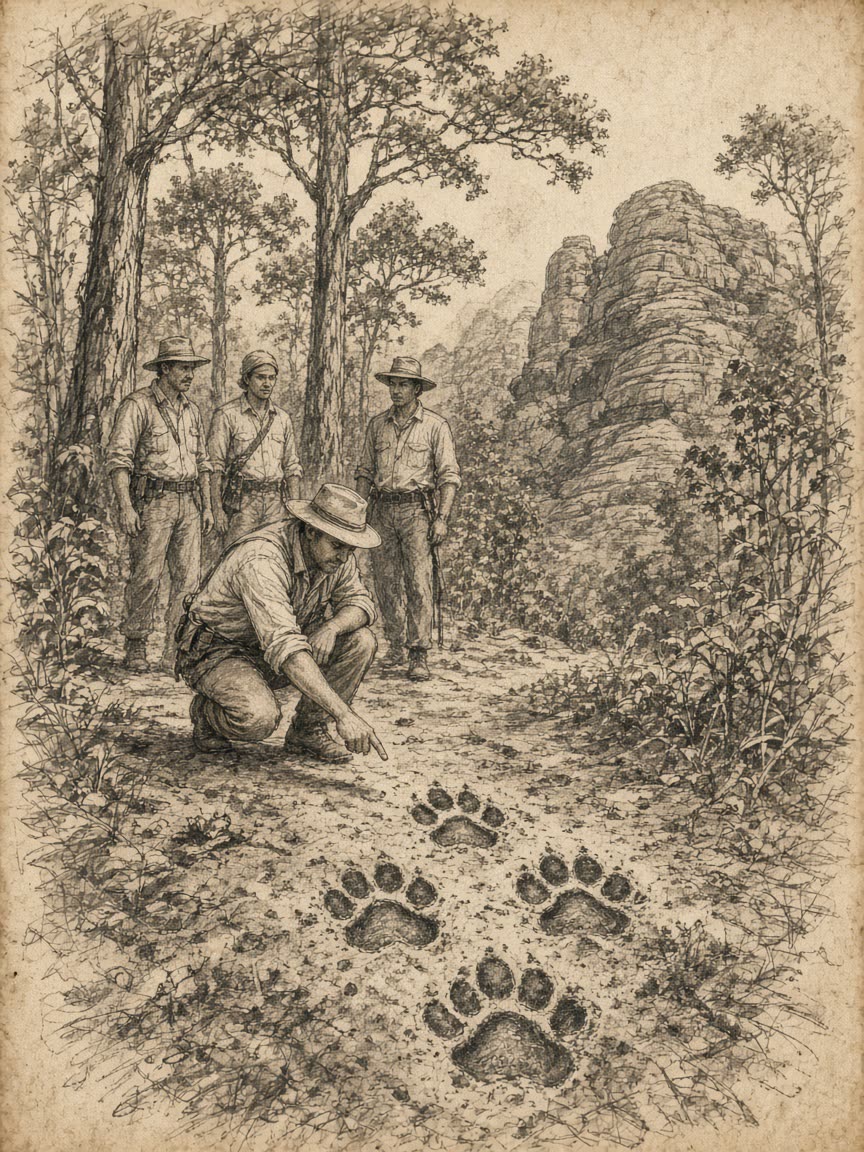
The Better India's March 2025 profile of a former field director reports 61 unique tigers identified by camera trap in 2023, against an overall estimate of 80 for the reserve. The gap between 61 and 80 is normal in camera-trap work: a trap grid photographs the animals that walk past it, and statistical models then estimate how many were missed. In general, each tiger is identified by its stripe pattern, which is unique on each flank, so a 'unique' count is a count of individuals, not of photographs. The reserve's hilly terrain and 1,339 square kilometres of core make full coverage expensive, which is one reason the figure moves between sources.
Collars on the newcomers
The three-year-old Bandhavgarh tiger released in Churna on 23 to 24 December 2024 was fitted with a collar for what the Free Press Journal called round-the-clock monitoring. The two Bhojpur males released around 2 January 2026 were held in an enclosure for nine months first, which lets the department check health and hunting ability before release. Field Director Rakhi Nanda has been the named officer on these releases and on the barasingha updates; Deputy Director Rishibha Singh Netam was quoted on the death of T-66 in August 2025. In July 2026 the department reported two tigers, one of them T-56, ranging near Tawanagar and Kesla villages, with capture attempts under way.
The national count
The All India Tiger Estimation is the NTCA's four-yearly exercise; the 2018 and 2022 cycles are the ones that matter for Satpura's current figures. The state result is clear: Madhya Pradesh went from 526 tigers in 2018 to 785 in 2022. The reserve-level 2022 figure for Satpura is not clear, because the NTCA status report could not be retrieved when we compiled this page and the summary report has no reserve table. Wikipedia's tiger reserves table prints 50 for Satpura in 2022 without a row citation, and the WPSI, citing the same 2022 estimate, gives 149 tigers for the Satpura-Melghat block of 9,427 square kilometres. If you need the official number, ask the reserve office or check the NTCA site directly rather than relying on any secondary figure, including ours.
Counting the deer
The reintroduced barasingha are counted more precisely than the tigers because they live in known meadows and some are in an enclosure. The reserve's page gives 67 in the Bori meadows, 27 at Malini in Churna and 35 captive, 129 in total; Dainik Jagran's October 2026 report, quoting the field director, gives about 303 in three units. The two numbers are from different dates. Chital brought from Pench, 1,567 between 2016 and 2022, were counted on arrival; the reserve says ungulate density is still low, which implies ongoing prey monitoring even if the method is not published.
Patrolling and what it changed
The reserve's village-relocation page gives one measurable result of protection work: forest offence cases fell from 180 to 210 a year to 50 to 60 a year once villages had moved out of the core. The 2022 Management Effectiveness Evaluation scored Satpura at 93.18 per cent, second in India, and protection is one of the criteria scored. Beyond those two data points we did not find published patrol statistics for the reserve.
How visitors help
Tell your guide the time and place of any tiger, leopard, dhole or bear sighting so it goes into the gate register; in a reserve with few vehicles each record counts. Photograph both flanks of any tiger you see if you can do so without crowding it; stripe patterns identify individuals and lodges pass useful images to the department. Report any snare, fire or person on foot in the core, which the rules do not allow outside the designated trails. The forest experience page explains the etiquette. For how to book a drive, see the safari booking page.
Sources
- Satpura Tiger Reserve: Village relocation
- Satpura Tiger Reserve: Barasingha reintroduction
- Satpura Tiger Reserve: Supplementation of prey
- Satpura Tiger Reserve: Administrative body (programme navigation)
- The Better India: IFS officer Krishnamoorthy and Satpura (2025-03-04)
- Free Press Journal: Bandhavgarh's 3-year-old tiger relocated to Satpura (2024-12-24)
- ETV Bharat: Two cubs released in Satpura Tiger Reserve (2026-01-04)
- ETV Bharat: Two tigers leaving Satpura core area (2026-07-09)
- Deccan Herald: Tiger dies in Satpura, territorial fight suspected (2025-08-13)
- Wikipedia: Tiger reserves of India
- WPSI: Tiger status
- NTCA: MEE 2022 summary report
- Dainik Jagran: Satpura barasingha population crosses 300 (2026-10-11)
FAQ
Wildlife Monitoring: Satpura FAQ
- How are tigers counted in Satpura?
- By camera trap, which identified 61 unique tigers in 2023 against an estimate of 80, by collars on relocated tigers, and by the NTCA's four-yearly All India Tiger Estimation. The official 2022 reserve-level NTCA figure could not be retrieved when we checked.
- Are relocated tigers in Satpura tracked?
- Yes. The Bandhavgarh tiger released in Churna in December 2024 wears a collar for round-the-clock monitoring, and the Bhojpur cubs released in January 2026 were held in an enclosure for nine months before release.
- Can visitors contribute to monitoring?
- Report sightings to your guide for the gate register, photograph both flanks of a tiger when you can do so without disturbing it, and report snares, fires or people on foot in the core.
Ready to see a wild tiger?
From the first call to the last transfer, we're with you. We book the safari zones the day they open, choose the lodges, arrange every train, flight and road journey, and stay on call while you travel.
Plan My Safari