Figures as of 2026-10-07 · page checked 2026-11-18
The forest experience at Sariska Tiger Reserve begins in the dark outside a gate, like every safari in India. From there it diverges, because this is dhok country, northern tropical dry deciduous forest and thorn forest on Aravalli hills between 300 and 722 metres, with no perennial river and a temple 22 km inside that gets lakhs of pilgrims a year. A drive here is a long loop through dry valleys and over rocky passes, past landmarks with names like Kalighati, Jalebi Chowk and Naya Pani, in a reserve where, in 2021, the tiger density was 0.9 per 100 km2. A day on a drive runs as follows.
The dawn gate
The morning slot opens at 7:00 from November to January, 6:30 in October and in February and March, and 6:00 from April to June, according to the booking sites. You arrive before that with the photo ID you booked with, because the e-ticket is matched to it at the gate. Your guide and driver are included in the permit. In December and January the open Gypsy at 7 AM is cold; WPSI gives the reserve's low as 0 degrees, and a scarf and jacket are not optional. The zone was allotted when the permit was issued, at random, so the morning's route is a surprise you find out at the gate.
The first hour
The first hour is the best for cats, in any Indian forest, and in Sariska it is also when the dhok hills are at their quietest. Out of Sariska Gate the routes run through Kalighati, which most of the listed zones share; out of Tehla they climb towards Kabri and Kankwari. The guide is watching the track edges for pugmarks laid down overnight and listening. The sounds you learn fast are the grey francolin, which the NTCA describes as very dense here, the peafowl, which is equally dense and much louder, and the langur, the reserve's most common primate. A single langur cough is nothing. A troop in full alarm, repeated, with the sambar belling in answer, is the reason the engine goes off.
Alarm calls and what they mean
- Langur: a harsh cough, repeated from the trees. The most reliable alarm in Sariska because langurs are everywhere and sit high.
- Sambar: a single deep bell, often repeated at intervals. Sambar are the tiger's main wild prey here and do not waste the call.
- Chital: a sharper, higher bark, often from several animals at once.
- Peafowl: a scream, which can mean a cat or can mean another peafowl. Treat it as a prompt to listen for the others.
- Rhesus macaque: around the temples, a chatter; less useful because the troop is reacting to people as often as predators.
This is standard field craft that applies in any tiger forest; it is not a Sariska statistic. What is specific to Sariska is the openness: calls carry across the dry valleys further than they would in dense forest, and a guide can often tell you which side of a ridge the animal is before you have heard anything yourself.
The quiet middle
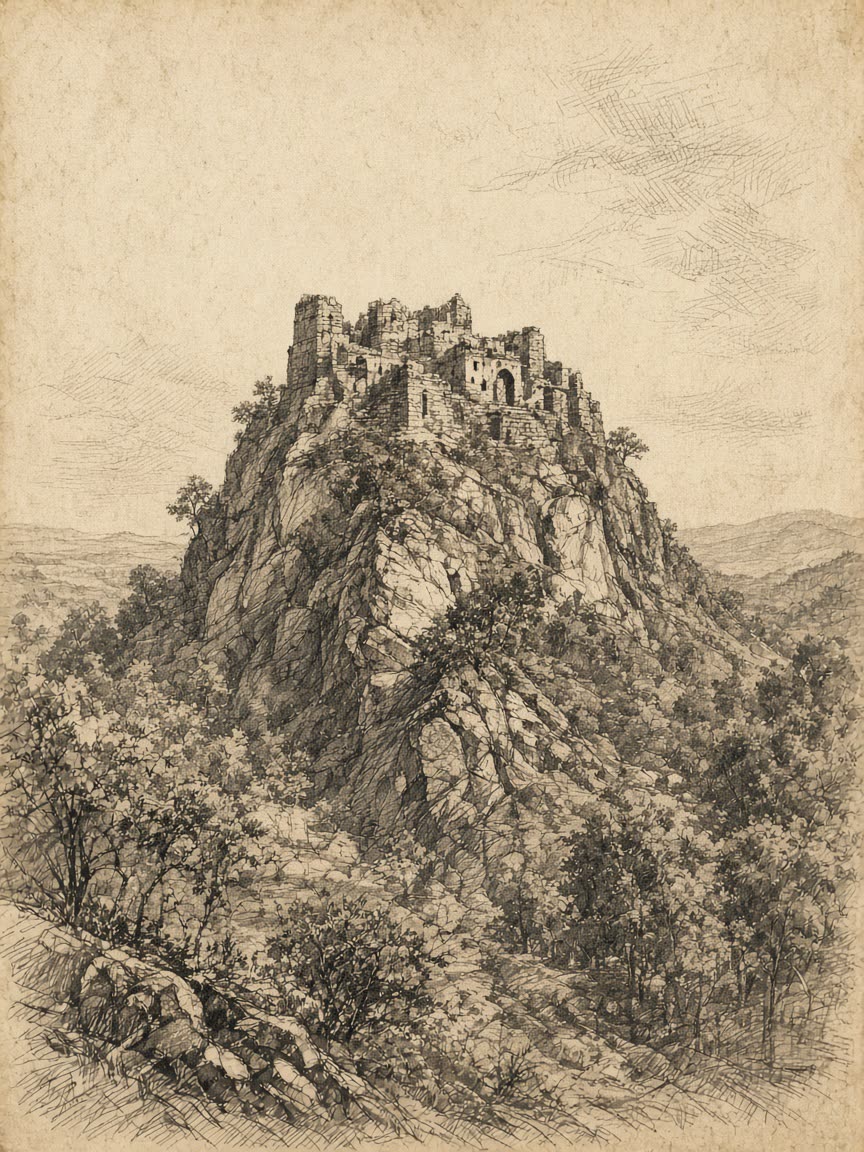
By the second hour the light is up and the first-hour tension is gone. This is the part of a Sariska drive for people who like forests more than lists. Sambar and nilgai, both at densities the NTCA calls very high, stand in the open; wild pig root along the track; a troop of langur crosses in front of the vehicle. On the Tehla routes you reach Kankwari Fort on its isolated hill, and the Neelkanth temples with their 10th-century inscriptions. On the Sariska Gate routes you reach Pandupol, where the Hanuman temple is open from 6 AM to 7 PM and Wikipedia records a spring and a 35-foot waterfall beside it. The guide will stop at a pool and wait. In the dry months, from March, the pools are where everything comes, and waiting at one for twenty minutes is a better bet than driving for an hour.
The people
A guide and a driver come with every permit. There are still about 29 villages in or near the core, with five relocated so far, so the people you meet on the track often grew up inside or beside this forest. The 24-hour tiger monitoring teams and night patrols the NTCA describes are the people whose jeeps you pass on the track and whose camera traps you see strapped to the trees. Cattle-kill compensation, paid within 24 hours, runs through those same staff and the villages. A question about which tigress has cubs in which range usually gets a better answer than a demand to find a tiger.
Pandupol on a Tuesday
If your zone takes you to Pandupol on a Tuesday or Saturday, you will see what the Supreme Court case is about. The Central Empowered Committee counted around 630 private vehicles a day to the temple on those days in 2024, and 1,800 a day during the August to September mela. The court accepted a ban on private vehicles on 7 August 2024, but as of April 2026 the forest department was still setting vehicle fees for Pandupol visitors, so expect to share the road. A tiger reserve that is also a pilgrimage route, with rhesus macaques at the temple steps and sambar in the valley below, is an odd thing to drive through. Go on a Monday or a Thursday if you can. Our conservation page has the case in full.
Walking and boat options
We found no walking safari, boat safari, night drive or full-day permit for Sariska in any source we used. The reserve has no perennial river to boat on, and the core is vehicle-only. Siliserh Lake, outside the forest 15 km south-west of Alwar, is the nearest large water body, and Outlook Traveller mentions a 2 km walk from the main road to the Naldeshwar shrine. If walking or boats are the point of your trip, our pages on walking safaris and boat safaris cover the parks that run them.
Etiquette
Keep your voice down at a sighting, keep your hands inside the Gypsy, and let the guide decide when to move. Do not ask the driver to leave the track. Do not play music or take calls in the forest. At Pandupol, if you get down, stay on the steps and paths and keep away from the macaques. Carry your plastic out. If another vehicle has a sighting, wait your turn; crowding a cat is the quickest way to lose it for everyone.
The drive with no tiger
Most Sariska drives end without a tiger, and you should book knowing that. The density was 0.9 per 100 km2 in 2021 against 9.6 at Ranthambore; the count has climbed to 58 since, but more than half are cubs that stay hidden, and the core is 881 km2. What you will have had is three and a half hours in an open, dry hill forest with sambar and nilgai at very high densities, leopards at 167 to the reserve, striped hyena and caracal on the list, 211 species of birds and two gates' worth of forts and temples. If the tiger is the only thing that would make the trip worthwhile, read our tigers page first and plan three drives, not one. For how to build those drives into a trip, see plan your visit and our Sariska hotels page.
Sources
- NTCA brief note on Sariska Tiger Reserve
- sariskasafari.in FAQ
- Utsav Camp Sariska: safari zones and routes
- nakshiq: Sariska safari (2026-06-03)
- hawamahaltickets: Sariska safari booking (2025-02-09)
- WPSI: Sariska Tiger Reserve
- Nature inFocus: the changing diet of tigers in Sariska (2021-01-22)
- Free Press Journal: Sariska tiger count rises to 58 (2026-10-18)
- NTCA/WII: Status of Leopards in India 2022
- Incredible India: Pandupol Hanuman Ji Mandir
- Wikipedia: Pandupole
- ThePrint/PTI: unchecked traffic affecting wildlife in Sariska (CEC report) (2024-08-05)
- ThePrint: Rajasthan to ban private vehicles to Pandupol (2024-08-08)
- ETV Bharat: forest department hikes entry fees for Ranthambore and Sariska by 10 percent (2026-04-01)
- ETV Bharat: three villages awaiting relocation from Sariska core (2025-01-11)
- Outlook Traveller: Sariska National Park getaway guide
- Incredible India: Alwar
- Jio Institute exhibit: Neelkanth Mahadev group of temples
FAQ
The Forest Experience: Sariska FAQ
- What time does a Sariska safari start?
- Morning slots open at 7:00 from November to January, 6:30 in October and February to March, and 6:00 from April to June, with afternoon slots from 14:00 in winter to 15:30 in late May and June, per booking sites. Each slot lasts three and a half hours.
- Is Sariska safari worth it if I might not see a tiger?
- Yes, if you go for the forest. Sambar and nilgai are at very high densities, leopards number 167 inside the reserve, the bird list runs to 211 species, and the Tehla routes pass Kankwari Fort and the Neelkanth temples. Plan two or three drives for a fair chance at a tiger.
- Can I walk in Sariska Tiger Reserve?
- Not inside the core; safaris are by Gypsy or canter and we found no walking safari in any source. Outside the forest, Outlook Traveller mentions a 2 km walk to the Naldeshwar shrine and Siliserh Lake is open to visitors.
Ready to see a wild tiger?
From the first call to the last transfer, we're with you. We book the safari zones the day they open, choose the lodges, arrange every train, flight and road journey, and stay on call while you travel.
Plan My Safari