Figures as of 2026-11-18 · page checked 2026-11-18
Jim Corbett National Park's wildlife lives across 1,288.31 sq km of tiger reserve (821.99 sq km core, 466.32 sq km buffer, per the NTCA brief note and the WII MEE-TR page; ETV Bharat gives 1,288.34 sq km), spread over three districts: Pauri Garhwal, Nainital and Almora. Wikipedia lists only Nainital district, but both the NTCA note and the official portal FAQ give three. The reserve lies between 29°25' and 29°40' N and 78°05' and 79°05' E, with headquarters at Ramnagar in Nainital district.
Altitude is given as 400-1,220 m in the lead of Wikipedia's park article and 360-1,040 m in its body and infobox; the NTCA note gives no altitude. Either way, the range is modest: this is Bhabar and lower Shivalik country, undulating ground cut by valleys, not high mountain.
Rivers, reservoir and the shape of the land
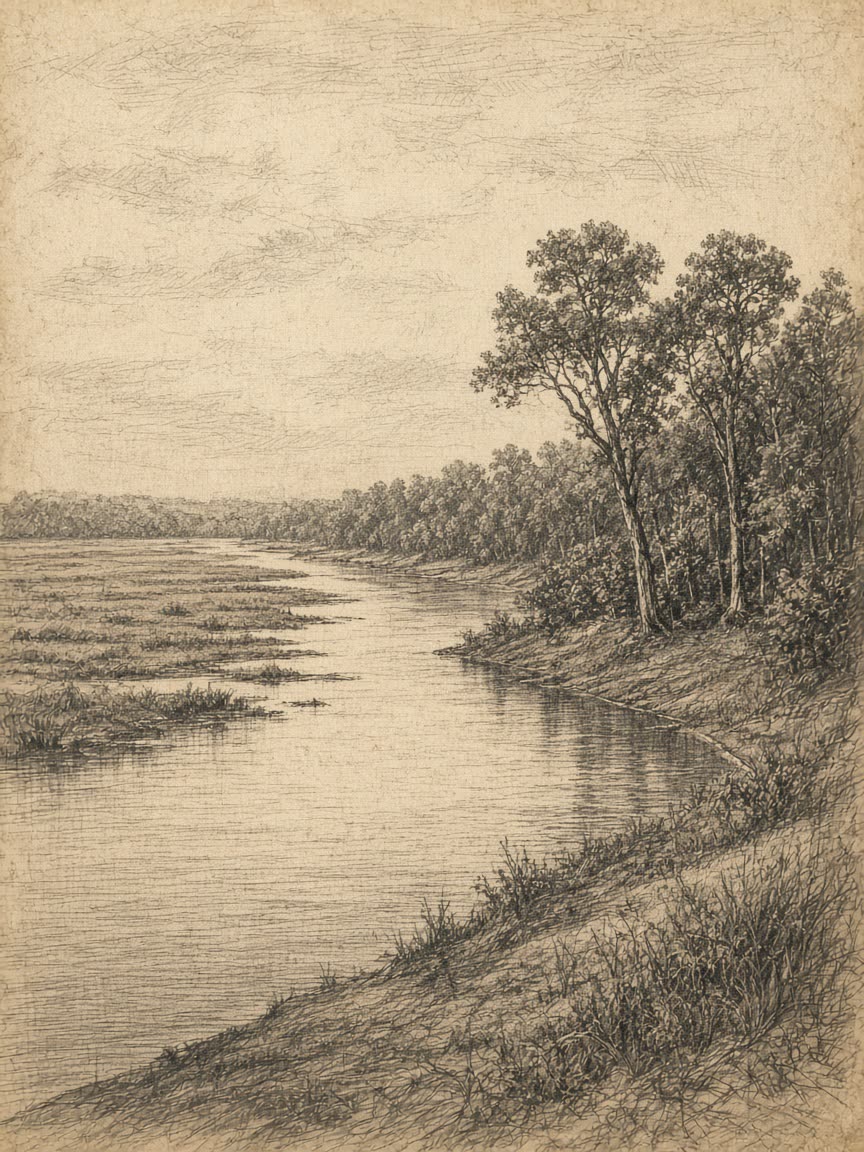
The Ramganga is the spine of the park. It formed the Patli Dun valley, and since 1974 it has been held back by the Ramganga Dam at Kalagarh, inside the park in Pauri Garhwal district. The reservoir covers 78.31 sq km and is the open water you look out over from the Dhikala zone. The Palain (Pallaen) and Sonanadi rivers also drain the reserve, and the Kosi and Gola run through the corridor areas on its edges. The Kosi is the river you cross at Garjiya and the one most resorts near Ramnagar are built beside.
Forest types and grasslands
The NTCA note classifies the vegetation into two broad groups. North Indian tropical moist deciduous forest covers Moist Shivalik Sal, Moist Bhabar Dun Sal, moist mixed deciduous forest and alluvial savannah woodland. Northern tropical dry deciduous forest covers Dry Shivalik Sal, dry bamboo brakes and Shivalik chir pine on the higher ridges. There are also grasslands and old plantations of teak, eucalyptus, Ailanthus and sissoo planted in the 1960s and 70s. Lantana and Cannabis are the listed invasive plants.
Wikipedia summarises the same picture as roughly 73% dense moist deciduous forest dominated by sal, with grasslands making up about 10%. The NTCA note says the chaurs (grasslands) were about 20% of the old national park core, and names them: Dhikala, Phulai, Khinnanauli, Paterpani, Mohanpani, Bhadhai and Bijrani. The WII page explains that the chaurs are either riverine, dominated by Saccharum spontaneum, or anthropogenic, meaning they are former village sites that have stayed open since the villagers left.
The NTCA note counts more than 110 tree species and 51 shrub species. Wikipedia reports that a 1970s survey found 488 plant species, and that a 2023 WII profile raised that to 617 plant species including 110 trees.
Species counts, with their sources
| Group | Count | Source |
|---|---|---|
| Mammals | 50 species | Wikipedia |
| Birds | 580 species (infobox) or "more than 586" (text) | Wikipedia |
| Reptiles | 25 species (infobox) or 33 (text) | Wikipedia |
| Amphibians | 7 species | Wikipedia |
| Fish | 7 species | Wikipedia |
| Dragonflies | 36 species | Wikipedia |
| Plants | 617 species including 110 trees (2023 WII profile, via Wikipedia); 488 in the 1970s | Wikipedia |
| Trees and shrubs | more than 110 tree species, 51 shrub species | NTCA brief note |
| Threatened species | about 40 (4 critically endangered, 10 endangered, 26 vulnerable) | NTCA brief note |
| Tigers | 260 (All India Tiger Estimation 2022), the highest of any reserve | PIB, 29 July 2023 |
| Elephants | about 1,100 in 2019 | Wikipedia, citing Times of India |
We could not find an official Corbett Tiger Reserve bird checklist number, so the bird figures above are Wikipedia's. The Sitabani reserve in the buffer claims over 500 species on its own. A WWF-India and Tiger Conservation Foundation survey with 62 participants, held one June (the year is not stated in the report; around 2023), recorded about 275 species in a few days.
What lives where
The chaurs and the reservoir margin at Dhikala are where the big grazers gather: elephants come into the Dhikala chaur in summer to feed and mud-bathe, and chital, hog deer and sambar use the grass edges. Tigers in summer move to the Ramganga and lie in its water. Gharial and mugger crocodile live in the Ramganga, both released there in the past. The Sarapduli slopes hold Himalayan goral. Sitabani, in the buffer, sees Himalayan black bear, yellow-throated marten, goral and serow in the colder months, and elephants pass through it between the core and the buffer. Swamp deer were lost from the park after the dam submerged their riverine grassland.
The species pages on this site go into each group: tigers, leopards, mammals and small cats, birds and reptiles.
The seasonal rhythm
The park's year is set by the monsoon. Rain falls mainly from July to September, the Ramganga and the chaurs flood, and the Dhikala, Lohachaur and Sonanadi zones close to day visitors from 16 June to 14 November. Jhirna and Dhela stay open all year. Winters run 5-30 °C with foggy mornings, and mid-December to late February mornings at Dhikala are very cold. Summers climb to around 40 °C, which is when the forest dries, the grass is burnt or grazed short and animals are pulled to the river. Tiger sightings are reported as best from April to mid-June. The best time to visit Jim Corbett page breaks this down month by month, and the safari page has the closure table.
A species list is not the same as a sighting list. On a short visit you will almost certainly see chital, sambar, langur and macaque, probably elephant from the Dhikala side, and a good spread of birds; everything else is a matter of time in the forest. For how to plan that time, see Plan your visit.
Sources
- NTCA brief note on Corbett TR
- WII MEE-TR Corbett page
- Wikipedia, Jim Corbett National Park
- ETV Bharat, Uttarakhand tiger numbers (2025-11-27)
- Official portal FAQ (corbettonline.uk.gov.in)
- Wikipedia, Ramganga Dam
- PIB, AITE 2022 reserve-wise figures (2023-07-29)
- Nature inFocus, Dhikala guide
- Wikipedia, Sitabani Wildlife Reserve
- inkl/PTI, Corbett bird survey
- corbetttigerreserve.in (private agency) FAQ
- Nature Safari India, Dhikala FRH guest PDF (2025)
FAQ
Biodiversity: Jim Corbett FAQ
- How many species of animals are there in Jim Corbett National Park?
- Wikipedia gives 50 mammal species, 580 to more than 586 bird species, 25 to 33 reptile species, 7 amphibians, 7 fish and 36 dragonflies. The NTCA brief note counts about 40 threatened species and more than 110 tree species. We could not find an official bird checklist figure from the reserve itself.
- What type of forest is Jim Corbett?
- Mostly sal. The NTCA note classifies it as North Indian tropical moist deciduous (Moist Shivalik Sal, Moist Bhabar Dun Sal, moist mixed deciduous and alluvial savannah woodland) and Northern tropical dry deciduous (Dry Shivalik Sal, dry bamboo brakes and chir pine), with grasslands called chaurs. Wikipedia puts dense moist deciduous forest at about 73% and grassland at about 10%.
- Which rivers flow through Jim Corbett?
- The Ramganga, which formed the Patli Dun valley and is dammed at Kalagarh inside the park, plus the Palain and Sonanadi. The Kosi and Gola run through the corridor areas on the park's edges. The reservoir behind the dam covers 78.31 sq km.
Ready to see a wild tiger?
From the first call to the last transfer, we're with you. We book the safari zones the day they open, choose the lodges, arrange every train, flight and road journey, and stay on call while you travel.
Plan My Safari